text by Dorota Osińska
When Alfred Tennyson published ‘The Kraken’ in 1830, he gave Victorian poetry one of its most ambiguous images of hidden power, unaffected by history, culture, and human consciousness. Almost two centuries later, Florence + the Machine released ‘Kraken’ (Everybody Scream, 2025), a song that (consciously or not) reanimates this mythic beast not as the embodiment of silent creativity, but as a singing, ravenous artist. The echoes of Tennyson’s ‘The Kraken’ in the contemporary Western culture reveals interesting shifts in how it represents imagination and the artist’s relationship with visibility.
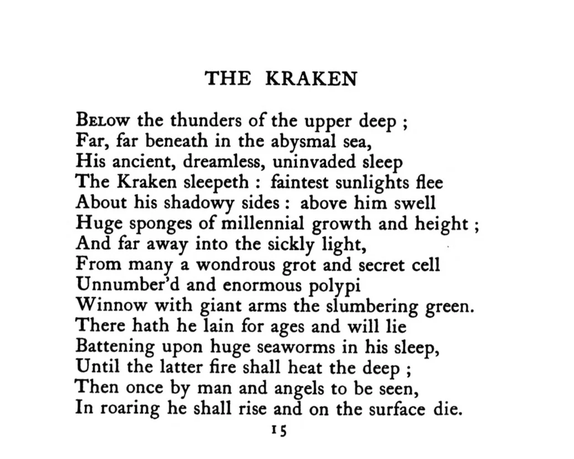
The Monster That Sleeps: Tennyson’s ‘The Kraken’ (1830)
Tennyson’s ‘The Kraken’ is one of his early poems (published in Poems, Chiefly Lyrical) and despite having been criticised for its technical flaws (uneven sonnet structure, irregular rhyming scheme), he managed to capture the imagination of the Victorians and later scholars. To quote Lawrence Mazzeno’s neat summary:
Christopher Ricks links the Kraken to the Lady of Shalott – a life of one imprisoned whose freedom leads inevitably to death. Gerhard Joseph argues that the “deeps” from which the Kraken rises are “the uncharted recesses of the mind itself. ” Margaret Lourie believes that the poem explores “the buried psychological space” that Tennyson often explores in his early poetry; for “the post-Freudian reader” the creature represents “the vaguely fearful machinations of the unconscious” (99).
As D. J. Palmer suggests, the poem presents ‘one of the many images of imprisoned or isolated life in Tennyson’s poetry’, linking him to the Romantic tradition in its attempts to capture ‘subjective being and the creative process of self-realization’ (“Tennyson’s Romantic Heritage” 23–24). Such a reading would be in line with how early Tennyson revisited the themes of isolation, loneliness, and despondency as for example in ‘Mariana’ where subjectivity is radically withdrawn from social connection. In a similar vein, ‘The Kraken’ functions as a symbol of the poet’s solitary creative condition.

The poem situates its monster ‘far, far beneath in the abysmal sea’, a space removed from human time and perception. Despite its potential, Tennyson’s Kraken remains concealed – it sleeps, surrounded by various lifeless creatures. But it does not actively create, it doesn’t speak, shape, or perform. Instead, it simply is. Its power lies in its existence alone, functioning as the embodiment of what Romantic writers often imagined as genius – colossal, with extraordinary insight into existence, and fundamentally incompatible with commonplace social life. Crucially, the Kraken is not meant to rise as its emergence is reserved for the apocalypse: ‘Until the latter fire shall heat the deep; / Then once by man and angels to be seen.’ In fact, visibility here is a harbinger of revolution – to be seen is to die as the poem closes with the vision of extinction: ‘In roaring he shall rise and on the surface die.’
‘The Kraken’ talks about the lack of creative exposure. In early Tennyson, it is imagined as something too powerful to survive the gaze of the ordinary world and it secludes itself in the subterranean realms until the right moment of active creation comes into being.
The Monster That Sings: Florence Welch’s ‘Kraken’
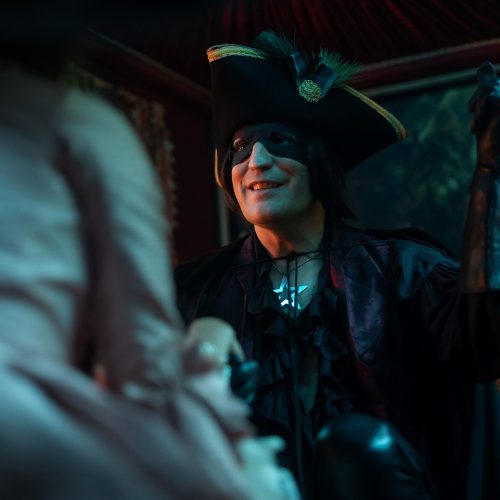
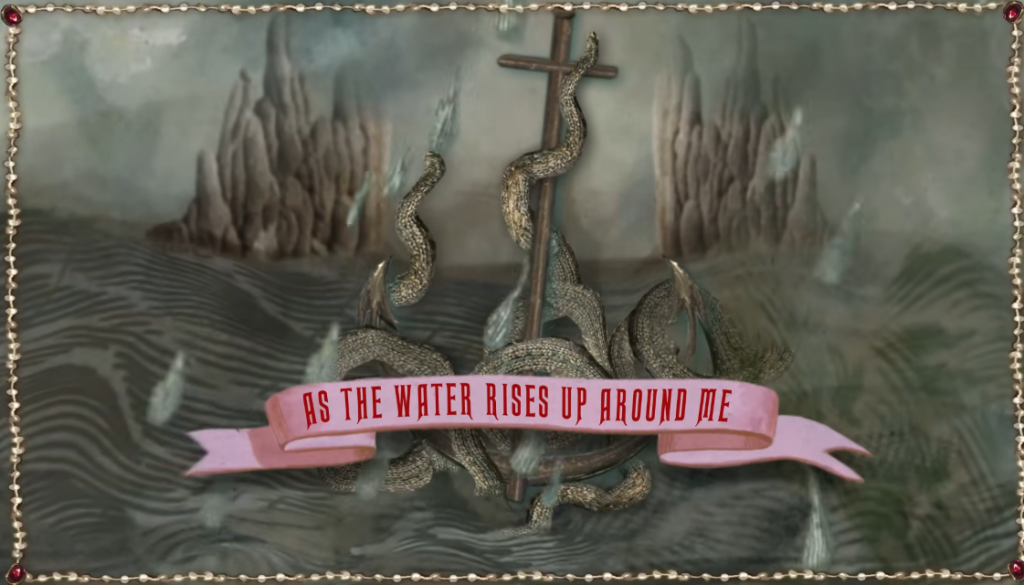
Florence Welch’s song ‘Kraken’ has an entirely different premise. Creativity here is not hidden in the depths of the oceans but it becomes embodied as it ‘Grow[s] restless and grow[s] hungry.’ Contrary to Tennyson’s despondent, silent Kraken, Welch’s lyrics mention that the transformation of the artist demands being visible – in her case through a song: ‘I grow many arms and legs and then I start to sing.’
This line is central to Florence’s reimagining of the Kraken myth. The monstrous body becomes a creative response to the industry pressure and the urgent need for creating. Many arms suggest excess and the drive to perform. Unlike Tennyson’s Kraken, Florence’s creature is aware of its appetite, asking the imaginary audience – ‘Did you know how big I would become? / And how much I would eat?’ Hence, artistic success is framed as consumption of attention, love life, and even her peers. Yet, the song refuses to romanticise this hunger, taking into account its darker side, including guilt (‘I kissed them all and let them drown’) and defiance (‘You said I would be nothing, but look, I’m really something’). Contrary to Tennyson’s solitary modes of imagination, here the artist is visible, ambitious, and competitive for being widely acknowledged.
One of the most revealing contrasts between the two Krakens lies in how they relate to being perceived. Tennyson’s creature is almost invisible, its one moment of exposure is framed as the apocalyptic foreshadowing. In contrast, Florence’s Kraken demands open recognition (whether it’s a praise or an accusation) as the song repeatedly asks, ‘Do you see me now?’ Read together, Tennyson and Welch reveal a shift in how artistic creativity is imagined across centuries. In Tennyson, the Kraken stands for creativity which is defined by hidden emotions and the moments of stasis. Welch revises this logic by presenting Kraken as a monster who remains deeply embodied, excessive, and sustained through visibility.
Works Cited
Florence + the Machine. “Kraken.” Everybody Scream, Universal Music Operations Limited, 2025.
Mazzeno, Lawrence. Alfred Tennyson. A Companion. McFarland & Company, 2020.
Palmer, D. J. “Tennyson’s Romantic Heritage.” Tennyson. Writers and Their Background. Ohio University Press, 1975, pp. 23–51.
Tennyson, Alfred Lord. “The Kraken” [1830]. The Works of Alfred Lord Tennyson, Wordsworth Poetry Library, 2008, p. 46.